
Colorado Ignition Interlock Device: Requirements, Costs & Rules
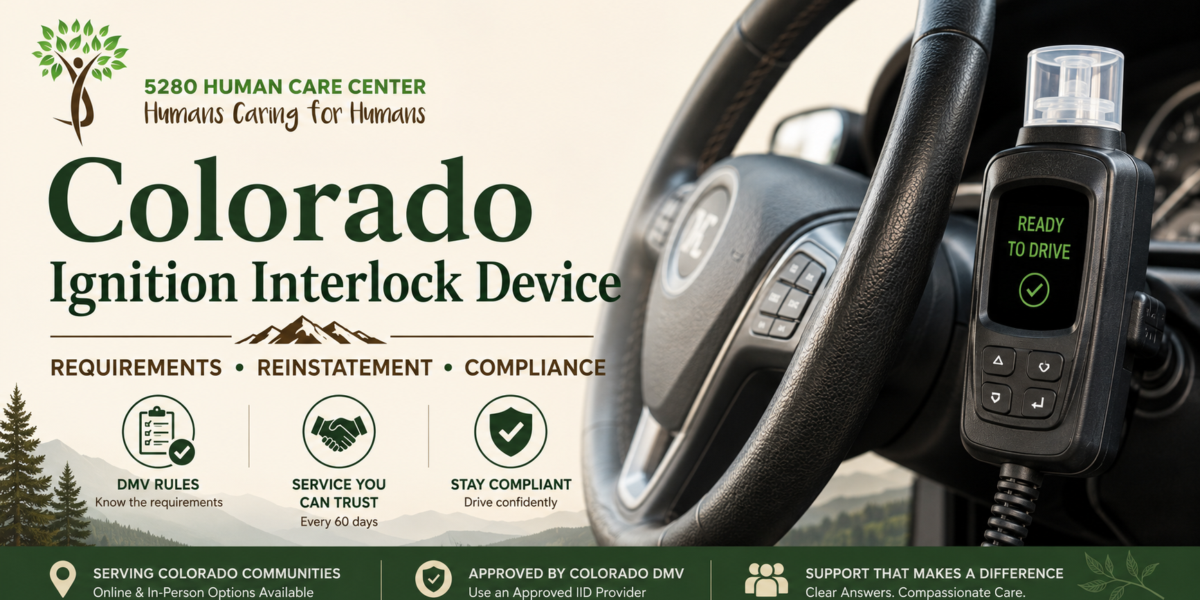
If your Colorado driver’s license has been revoked because of a DUI, alcohol-related driving offense, high BAC, or chemical-test refusal, an ignition interlock device (IID) may be part of getting back on the road.
Colorado’s ignition interlock rules can be confusing because the length of the requirement, early-reinstatement eligibility, Level 2 education requirements, and consequences for violations depend on your individual driving record.
A Colorado ignition interlock device is a breath-testing device connected to a vehicle’s ignition system. The driver must provide an acceptable breath sample before the vehicle can be operated and may also be required to complete additional tests while driving.
Colorado may require an IID as part of driver’s-license reinstatement after certain DUI-related revocations, high-BAC cases, chemical-test refusals, and repeat alcohol violations.
Do not remove an IID simply because you believe your required period has ended. Confirm with the Colorado DMV that your restriction has been satisfied before having the device removed.
What Is a Colorado Ignition Interlock Device?
An ignition interlock device is a breath-alcohol testing device installed in a vehicle.
Before the vehicle can be operated, the driver provides a breath sample. If the device detects alcohol above the permitted threshold, it can prevent the vehicle from starting and record the event.
The device can also require additional breath samples after the vehicle has been started.
Colorado uses ignition interlock restrictions as part of the driver’s-license reinstatement process in certain alcohol-related cases.
How Does an Ignition Interlock Device Work?
The IID also records information used to monitor compliance with the Colorado ignition interlock restriction.
Who May Be Required to Have an IID in Colorado?
An ignition interlock restriction may apply in several circumstances, including:
- DUI or per-se driver’s-license actions
- High-BAC cases
- Chemical-test refusals
- Multiple alcohol-related driving violations
- Early driver’s-license reinstatement
- Other alcohol-related driver restraints
The exact requirement depends on your driving record, offense date, BAC, refusal history, and any other active restraints.
Colorado DMV requirements and criminal-court requirements are separate.
Completing probation or other court requirements does not automatically mean your ignition interlock restriction has ended.
The Colorado DMV controls your driving privilege and should be used to confirm your ignition interlock status.
How Long Will I Need an Ignition Interlock Device in Colorado?
There is no single IID period that applies to every Colorado driver.
The table below summarizes several common situations under current Colorado DMV guidance.
| Situation | Early Reinstatement | General IID Requirement |
|---|---|---|
| First DUI / Per Se, BAC below .149, violation on or after Jan. 1, 2023 | May be eligible when the revocation action becomes active | 9 months, running concurrently with the 9-month revocation |
| BAC .15 or higher | Early reinstatement may be available if requirements are met | 2 years |
| Chemical-test refusal | May be eligible after serving 2 months | 2 years |
| Second or subsequent per-se violation | Early reinstatement may be available | Generally 2 years |
Can an Ignition Interlock Help Me Reinstate My License Early?
In some circumstances, yes.
Colorado allows certain drivers with alcohol-related restraints to apply for early reinstatement with an ignition interlock-restricted license.
For violations occurring on or after January 1, 2023, qualifying drivers with a DUI or per-se action may be eligible to apply when the revocation becomes active. Drivers dealing with a chemical-test refusal generally must first serve two months of the revocation before applying for early reinstatement.
Colorado DMV states that early reinstatement is generally limited to drivers who:
- Are Colorado residents
- Were age 21 or older at the time of the violation
- Have satisfied the other applicable reinstatement requirements
Installing an IID by itself does not restore your driving privilege.
What Is Required for Colorado Early Reinstatement?
Requirements depend on the specific revocation, but Colorado DMV reinstatement requirements can include:
- Application for reinstatement
- Applicable reinstatement and DUI restoration fees
- SR-22 insurance
- Installation of an approved ignition interlock device
- An IID in every vehicle you own or may drive, when required
- Ignition interlock lease agreements and installation certificates
- Required alcohol and drug education or treatment documentation
For certain high-BAC or other alcohol-related cases, enrollment in or completion of Colorado Level 2 DUI Education and treatment may be part of the reinstatement process.
An installed IID does not mean you are legally allowed to drive.
Your driving privilege must actually be reinstated by the Colorado DMV. Follow the DMV’s reinstatement process and wait until you have the appropriate driving credential before driving.
How Often Does a Colorado Ignition Interlock Device Need to Be Serviced?
Colorado DMV requires an ignition interlock device to be serviced every 60 days.
These service appointments help maintain the device and allow required compliance information to be collected.
A driver who fails to report for required servicing can be subject to a driver’s-license suspension until the person returns to compliance.
What Happens If I Fail an Ignition Interlock Test?
The IID records alcohol-detection events and other compliance information.
Colorado DMV states that if the device prevents operation of the vehicle after detecting alcohol in three of any twelve consecutive months, the driver may face suspension and additional time on the ignition interlock requirement.
The extension can be as much as one additional year for each qualifying set of three failures.
If you receive a DMV notice concerning IID failures or compliance, review it promptly rather than waiting for additional violations to accumulate.
What Happens If I Drive Without the Required IID?
Colorado treats ignition interlock circumvention seriously.
According to Colorado DMV guidance, an interlock-restricted driver who drives a vehicle without the required device or attempts to circumvent the proper operation of the IID can face a driver’s-license revocation with no driving for at least one year.
The IID restriction applies to your driving privilege—not merely to one specific car.
Borrowing another vehicle does not automatically allow you to avoid the ignition interlock requirement.
Can I Drive Someone Else’s Car While I Have an IID Restriction?
Do not assume that you can.
Colorado reinstatement requirements can require an IID in every vehicle you own or may drive.
This can affect households where:
- Multiple family members share vehicles
- A spouse owns the primary household vehicle
- You occasionally borrow a relative’s car
- You have access to multiple vehicles
If you are unsure whether you can legally operate a particular vehicle, confirm the restriction with Colorado DMV before driving it.
How Much Does an Ignition Interlock Device Cost in Colorado?
There is no single statewide ignition interlock price.
Costs vary by approved provider and may include:
- Installation
- Lease or monitoring charges
- Required service appointments
- Lockout-related charges
- Device removal
- Other provider-specific fees
Rather than relying on old price ranges that can quickly become inaccurate, compare current pricing directly with Colorado-approved IID providers.
Want to Estimate the Bigger DUI Financial Impact?
An ignition interlock is only one potential Colorado DUI expense. Court costs, legal fees, insurance increases, driver’s-license fees, education or therapy, and other expenses may also apply.
Use the Colorado DUI Cost Calculator →Is Financial Assistance Available for Colorado Ignition Interlock Costs?
Colorado DMV offers an Ignition Interlock Financial Assistance program for some eligible drivers.
The DMV states that approved assistance is prorated toward future interlock lease charges and can total up to $400.
Eligibility and documentation requirements apply, and assistance is not retroactive.
Learn more through the Colorado DMV Ignition Interlock Financial Assistance program .
How Do I Find a Colorado-Approved Ignition Interlock Provider?
Colorado requires drivers in the ignition interlock program to use an approved provider.
Rather than relying on an old vendor list, use the DMV’s current provider directory:
View Colorado-Approved Ignition Interlock Providers
When comparing providers, consider:
- Installation location
- Service locations
- Appointment availability
- Installation fees
- Ongoing charges
- Removal fees
- Customer support
How Does Level 2 DUI Education or Therapy Fit In?
Ignition interlock requirements and DUI education requirements are separate, but both can be part of driver’s-license reinstatement.
Depending on your case, Colorado DMV may require enrollment in or completion of Level 2 Alcohol and Drug Education and Treatment.
That can include:
- Level 2 Education
- Level 2 Therapy Track A
- Level 2 Therapy Track B
- Level 2 Therapy Track C
- Level 2 Therapy Track D
Learn more about how long Level 2 Alcohol Education takes in Colorado and Colorado Level 2 DUI Therapy .
When Can I Remove My Ignition Interlock Device?
Do not remove the device merely because you believe the required number of months has passed.
Before removal:
- Confirm that your required IID period has been satisfied
- Confirm that no additional compliance time has been added
- Confirm that there are no other driving restraints
- Follow Colorado DMV instructions for removal of the restriction
- Follow your approved provider’s removal process
Frequently Asked Questions About Colorado Ignition Interlock Devices
How long do I need an ignition interlock after a first DUI in Colorado?
For certain first DUI or per-se violations on or after January 1, 2023 with BAC below .149, Colorado DMV describes a 9-month interlock requirement that may run concurrently with the 9-month revocation when early-reinstatement requirements are met. Other circumstances can result in longer requirements.
How long is the IID requirement for a BAC of .15 or higher?
A BAC of .15 or higher can result in a Persistent Drunk Driver designation and a two-year ignition interlock requirement.
How long is the IID requirement after refusing a chemical test?
Colorado DMV describes a two-year ignition interlock requirement following a chemical-test refusal. Early reinstatement may be available after serving two months if the applicable requirements are satisfied.
How often must a Colorado IID be serviced?
Colorado DMV requires ignition interlock devices to be serviced every 60 days.
What happens if I have three IID alcohol failures?
If the device prevents operation after detecting alcohol in three of any twelve consecutive months, Colorado DMV may impose a suspension and additional interlock time, potentially up to one year for each qualifying set of three failures.
Can I drive a vehicle that does not have an IID?
Generally, an interlock-restricted driver should not operate a vehicle that is not equipped as required. Driving a non-equipped vehicle or attempting to circumvent the IID can result in a driver’s-license revocation with no driving for at least one year.
Can I drive immediately after the IID is installed?
Not necessarily. Installing the device does not itself reinstate your license. Your driving privilege must be formally reinstated by the Colorado DMV before you can legally drive.
Do I need Level 2 DUI classes if I have an ignition interlock?
Possibly. Ignition interlock requirements and alcohol education or therapy requirements are separate. Depending on your record and reinstatement requirements, Level 2 Education and treatment may also be required.
Is financial help available for ignition interlock costs?
Colorado DMV offers an Ignition Interlock Financial Assistance program for some eligible drivers. Approved assistance may offset future lease charges, subject to the program’s eligibility and documentation requirements.