
Marijuana DUI in Colorado: How Long Should You Wait to Drive?
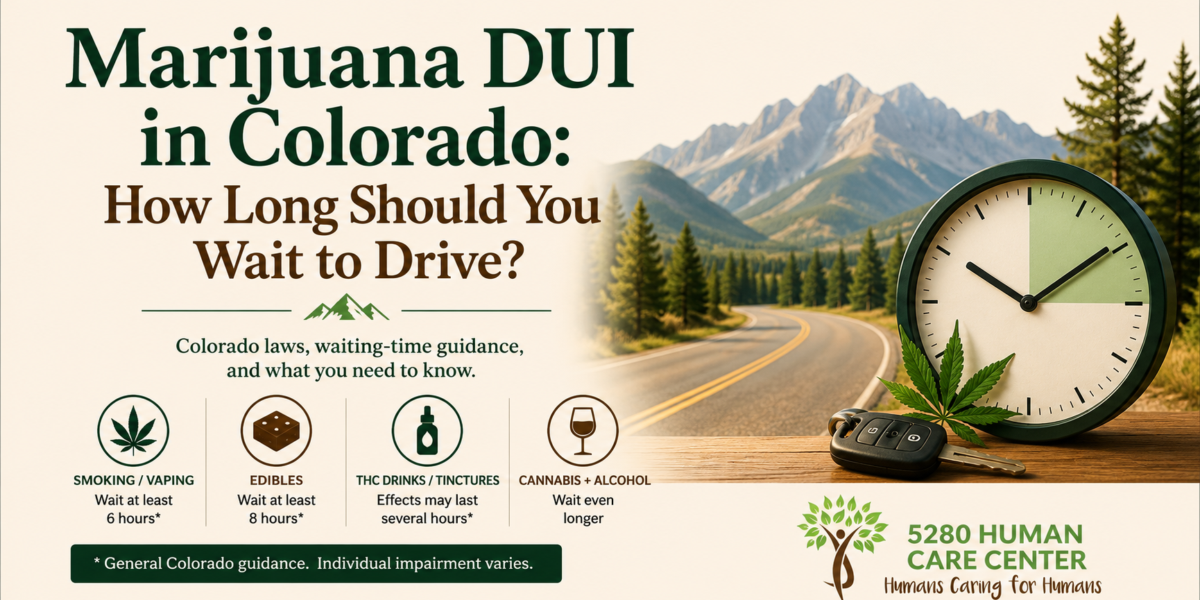
Marijuana may be legal for adults in Colorado, but driving while impaired by cannabis can get you a marijuana DUI in Colorado.
One of the hardest questions for cannabis users is also one of the most important: How long should you wait to drive after using marijuana in Colorado?
There is no single waiting period that guarantees you are safe or legally clear to drive after using marijuana in Colorado.
Current Colorado Department of Transportation guidance recommends waiting at least six hours after smoking cannabis containing less than 35 mg of THC and at least eight hours after eating or drinking cannabis containing less than 18 mg of THC. Higher doses may require longer waits, and combining cannabis with alcohol means you should wait even longer.
These are general safety guidelines—not a formula for determining whether a particular person is unimpaired. If you still feel any effects or are unsure whether you can drive safely, do not drive.
How Long Should You Wait to Drive After Using Marijuana in Colorado?
Cannabis impairment is difficult to predict. The amount of THC consumed matters, but so do the method of consumption, product potency, frequency of use, individual response, and whether cannabis is combined with alcohol or another substance.
Colorado safety guidance provides useful starting points, but the recommendations should not be treated as guarantees that you will be safe to drive at a particular time.
| Method | General Colorado Guidance | What to Know |
|---|---|---|
| Smoking / Vaping | Wait at least 6 hours after consuming less than 35 mg THC | Higher doses may require a longer wait. Effects vary by person and product. |
| Edibles | Wait at least 8 hours after consuming less than 18 mg THC | Edibles can take longer to take effect and may produce impairment that lasts substantially longer. |
| THC Drinks / Tinctures | Impairment may last several hours | Onset and duration vary based on formulation, dose, and individual response. |
| Cannabis + Alcohol | Wait longer | Using multiple intoxicating substances can increase impairment and crash risk. |
CDOT notes that even relatively small amounts of THC can impair some people. The safest approach is to plan transportation before consuming cannabis rather than trying to determine afterward whether enough time has passed.
What Does Colorado’s 5 ng THC Rule Actually Mean?
Five nanograms of THC is not a “safe-to-drive” limit.
Under Colorado law , if a driver’s whole blood contains 5 nanograms or more of delta-9 THC per milliliter at the time of the offense or within a reasonable time afterward, that result can create a permissible inference that the driver was under the influence of one or more drugs.
That is different from Colorado’s alcohol DUI-per-se standard. A THC result should not be interpreted as a simple line separating “legal” from “illegal” driving.
Cannabis does not behave in the body like alcohol. THC levels and actual driving impairment do not correspond in the same predictable way that blood alcohol concentration is commonly used in alcohol cases.
That means a driver should never use the 5 ng number as a target and assume that being below it automatically means driving is safe.
Can You Get a Marijuana DUI in Colorado?
Yes. Colorado law prohibits driving while under the influence of drugs, including marijuana. Legal recreational use, medical marijuana authorization, or purchasing cannabis legally does not make it legal to drive while impaired.
A marijuana-related DUI can be based on more than a blood-test number. Officers and prosecutors may consider the circumstances surrounding the stop and evidence of a driver’s ability to operate a vehicle safely.
How Is Marijuana Impairment Determined?
Unlike an alcohol DUI case, cannabis impairment cannot be reduced to one familiar roadside number. An investigation may involve several kinds of evidence.
Some Colorado law-enforcement officers also receive specialized training in recognizing signs associated with drug impairment.
Why Marijuana Impairment Is Different From Alcohol
Alcohol and cannabis can both impair driving, but they are processed differently by the body. That is one reason there is no cannabis equivalent of a simple “one drink per hour” rule.
Cannabis can affect abilities that matter behind the wheel, including:
- Reaction time
- Attention and concentration
- Judgment and decision-making
- Ability to divide attention between multiple tasks
- Perception of time and distance
- Planning and other executive functions
Importantly, the physical and cognitive effects that matter for driving can last longer than the subjective feeling of being “high.”
Smoking vs. Edibles vs. THC Drinks
Smoking, Vaping, and Dabbing
Inhaled THC generally reaches the bloodstream quickly, so effects tend to begin sooner than with an edible. Colorado safety materials describe impairment from smoking, dabbing, or vaping as potentially lasting several hours, although dose and individual response can extend that period.
Edibles
Edibles are particularly important from a driving-safety standpoint because their effects are delayed and may last much longer. A person may not feel the full effect for some time after eating a THC product, and Colorado guidance recommends waiting at least eight hours after consuming lower-dose edible or drink products.
Taking an additional dose because the first edible “isn’t working yet” can make the eventual effects stronger and more prolonged.
THC Beverages and Tinctures
Cannabis beverages and tinctures can fall somewhere between inhaled cannabis and traditional edibles in their onset and duration. Product formulation, dose, and individual response all affect how quickly impairment begins and how long it lasts.
What Happens When You Mix Marijuana and Alcohol?
Combining cannabis with alcohol can increase impairment. Colorado safety officials specifically advise people who use both substances to wait even longer before driving.
A designated driver should be sober—not simply the least impaired person in the group.
If alcohol and marijuana are both part of the evening, decide how everyone will get home before anyone begins consuming.
Can You Get a Marijuana DUI Even If You Feel Fine?
Feeling normal and being able to drive safely are not necessarily the same thing. People can underestimate their own impairment, and some effects of cannabis that matter for driving—such as slower reaction time or difficulty dividing attention—may not be obvious to the person experiencing them.
There is another important distinction: THC remaining in the body is not automatically the same thing as current impairment. Active delta-9 THC produces intoxicating effects, while inactive THC metabolites can remain detectable after those impairing effects have worn off.
This is one reason marijuana DUI cases are more complicated than simply asking whether someone has recently used cannabis.
What Happens After a Marijuana DUI in Colorado?
A drug-related DUI is a serious matter. Depending on the charge, prior history, court findings, and other circumstances, a DUI can involve fines and fees, probation, required education or treatment, community service, driving consequences, and—in some cases—jail.
If you are dealing with a Colorado DUI case, education and treatment requirements can become an important part of what happens next. Depending on your requirements, that may include Colorado Level II DUI Education or Level II DUI Therapy . 5280 Human Care Center can help you understand the program requirements that apply to you.
If You’re Unsure, Don’t Drive
The simplest way to avoid a marijuana DUI is also the safest: plan your ride before consuming cannabis.
Use a sober designated driver, rideshare service, taxi, public transportation, or stay where you are until you are confident the impairing effects have completely passed.
If you are trying to calculate whether you are “just sober enough” to drive, the better decision is to find another way home.
Frequently Asked Questions About Marijuana DUI in Colorado
How long after smoking marijuana should I wait to drive in Colorado?
Current Colorado safety guidance recommends waiting at least six hours after smoking cannabis containing less than 35 mg of THC. Larger amounts may require a longer wait. This is a general guideline rather than a guarantee that a particular person is no longer impaired.
How long after taking an edible should I wait to drive?
Colorado guidance recommends waiting at least eight hours after eating or drinking cannabis containing less than 18 mg of THC. Edibles can have delayed and long-lasting effects, so some people may need to wait longer.
Is 5 ng of THC the legal limit in Colorado?
Not in the same way that 0.08 BAC functions as Colorado’s alcohol DUI-per-se threshold. Five nanograms or more of delta-9 THC per milliliter of whole blood can create a permissible inference that a driver was under the influence of drugs. It should not be treated as a “safe” level for driving.
Can I get a DUI for marijuana even though recreational marijuana is legal?
Yes. Legal possession and use of marijuana do not make impaired driving legal. Colorado prohibits driving while under the influence of marijuana and other impairing drugs.
Does having THC in my system automatically mean I am impaired?
No. Active THC and inactive THC metabolites are different. Inactive metabolites can remain detectable after the intoxicating effects have ended. Marijuana DUI investigations consider evidence of impairment rather than simply whether a person has recently used cannabis.
Does mixing marijuana and alcohol make driving more dangerous?
Yes. Using cannabis and alcohol together can increase impairment. Colorado safety officials advise waiting longer before driving when the substances have been combined.
Need Help Understanding Your Colorado DUI Requirements?
DUI requirements can involve separate court, probation, DMV, education, and treatment obligations.
5280 Human Care Center can review your referral or paperwork and help you identify the appropriate Colorado DUI education or therapy program before you enroll.